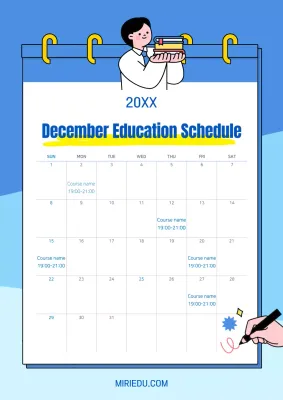
Create Professional Timetables with MiriCanvas Templates
In today's fast-paced world, effective time management is crucial for achieving productivity and success. Whether you're a busy professional, a student juggling multiple courses, or a parent managing family schedules, having a well-structured timetable can make all the difference. MiriCanvas, an innovative platform known for its user-friendly design tools, offers a range of professionally designed timetable templates that cater to diverse needs. This article will guide you through the process of creating professional timetables using MiriCanvas templates, exploring the key features and customization options that allow you to tailor each schedule to your specific requirements. From color-coding and layout adjustments to integrating reminders and deadlines, discover how MiriCanvas can transform your time management strategy, streamlining your tasks and enhancing your productivity. Join us as we delve into the world of digital scheduling and uncover the benefits of organizing your life with precision and style.
What is a Timetable and Why It Matters
A timetable serves as a tangible roadmap for navigating through the multitude of tasks and responsibilities that fill our daily lives. By allocating specific time slots for different activities, it enables individuals and organizations to prioritize effectively, ensuring that the most important tasks receive the attention they deserve. This prioritization is essential in avoiding the pitfalls of procrastination and ensuring that deadlines are met, ultimately contributing to a more efficient workflow. For students, a timetable can mean the difference between staying on top of coursework and falling behind, while for professionals, it can help manage projects with multiple moving parts, reducing the likelihood of oversight.
Moreover, the visual nature of a timetable aids in the cognitive process of time management. When tasks are displayed in a clear, organized manner, it becomes easier to grasp the broader picture of one's schedule, identify potential conflicts, and make necessary adjustments in advance. This visual clarity is particularly beneficial in complex scenarios where juggling numerous commitments is necessary. MiriCanvas enhances this aspect by providing visually appealing templates that are not only functional but also aesthetically pleasing, making the process of scheduling less of a chore and more of an engaging activity.
The flexibility offered by MiriCanvas' timetable templates is another significant advantage. Users can customize their schedules to reflect their unique needs and preferences, whether that involves color-coding tasks to signify their urgency or importance or adjusting the layout to better fit their personal planning style. This level of customization ensures that the timetable is not just a static document but a dynamic tool that evolves with the user's changing priorities and responsibilities.
In essence, a well-crafted timetable is more than just a list of tasks; it is a strategic tool that empowers individuals to take control of their time, leading to enhanced productivity and a greater sense of accomplishment. By utilizing platforms like MiriCanvas, users can create professional, personalized timetables that align with their goals, ensuring that every moment is accounted for and optimized. As we continue to navigate the demands of modern life, the importance of a reliable timetable cannot be overstated, serving as a cornerstone of effective time management and a catalyst for achieving both personal and professional success.
How to Create an Effective Timetable
To create an effective timetable, it is crucial to begin with a comprehensive understanding of your time allocation needs. Start by cataloging all your routine activities, commitments, and responsibilities. This foundational step ensures that no essential task is overlooked, allowing you to strategically position each activity within your schedule. Utilizing MiriCanvas's user-friendly drag-and-drop interface, you can efficiently allocate time slots to these activities, ensuring a logical flow to your day. This interface not only simplifies the process of schedule creation but also enhances precision, as you can easily adjust time blocks as needed without disrupting the entire timetable.
Once you have mapped out your basic schedule, customization becomes key to maximizing the effectiveness of your timetable. MiriCanvas offers a suite of customization tools that allow you to tailor your timetable to your specific needs. Color-coding is particularly beneficial in this regard, as it provides quick visual cues that can help you differentiate between categories of tasks, identify priorities, and manage your time more intuitively. For instance, you might choose a bright color for high-priority tasks that demand immediate attention, while using softer tones for routine activities that require less urgency. This visual differentiation aids in maintaining focus and managing workload effectively.
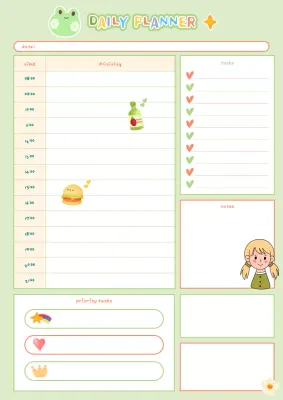
In addition to color-coding, incorporating visual elements such as icons or symbols can further enhance the clarity and functionality of your timetable. These elements serve as immediate reminders of task nature or urgency, facilitating quicker recognition and response. Moreover, including buffer times between tasks is a strategic decision that prevents schedule overlap and reduces stress, offering a cushion for unexpected delays or overruns. This foresight not only maintains the integrity of your timetable but also ensures a smoother transition from one task to another.
MiriCanvas templates play a pivotal role in this customization process. With professionally designed layouts tailored to daily, weekly, or monthly planning, these templates offer a robust starting point for creating a timetable that aligns with your personal or organizational objectives. The flexibility of these templates means that you can adapt them to accommodate changes in your schedule or priority shifts, maintaining a dynamic and responsive planning approach. This adaptability is essential in our fast-paced world, where the ability to quickly revise plans can lead to more effective time management and goal attainment.
Ultimately, an effective timetable is a blend of structure and flexibility, precision and adaptability. By leveraging the features of MiriCanvas, you can create a timetable that not only meets your scheduling needs but also enhances your productivity and efficiency. The combination of a well-organized schedule and the ability to personalize it according to your unique requirements ensures that you are always prepared to meet the demands of your day, paving the way for success in both personal and professional endeavors.
Recommended Timetable Styles
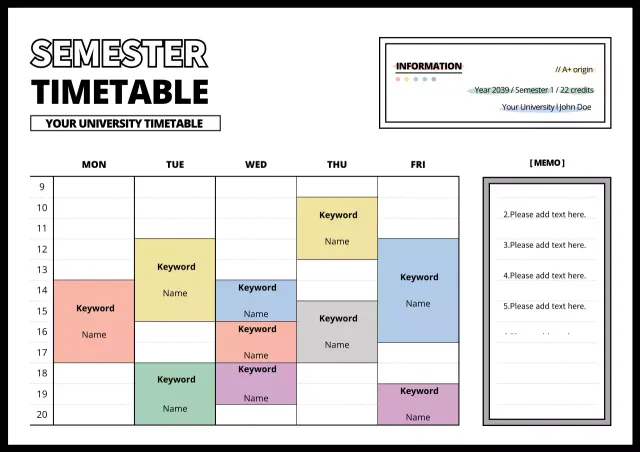
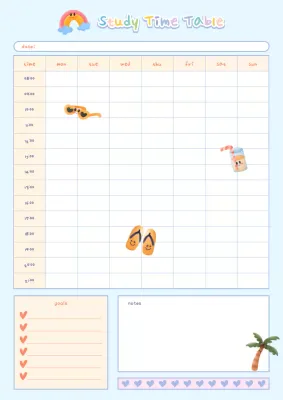
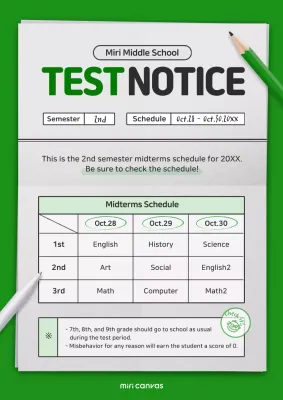
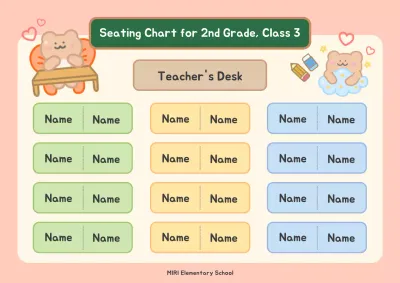
In selecting the right timetable style, consider your specific context and the audience who will be using it, as this will greatly influence the design and functionality required. For example, in an academic setting, grid-based timetables are particularly effective. These timetables provide a clear and organized structure that can accommodate detailed schedules, such as class timings and assignment deadlines. The grid format allows for easy visualization of weekly or monthly plans, which is essential for students and educators who need to keep track of numerous activities and responsibilities. MiriCanvas enhances this format with clean lines and customizable sections, ensuring both clarity and usability.
On the other hand, if you're managing a project with multiple phases and dependencies, a Gantt chart style might be more appropriate. This style is excellent for illustrating project timelines, as it visually represents the start and end dates of each task along with their interdependencies. The ability to see the entire project timeline at a glance helps in identifying potential bottlenecks and aids in resource allocation. MiriCanvas provides robust templates that allow you to set milestones and adjust timelines dynamically, making it easier to adapt to changes in project scope or deadlines.
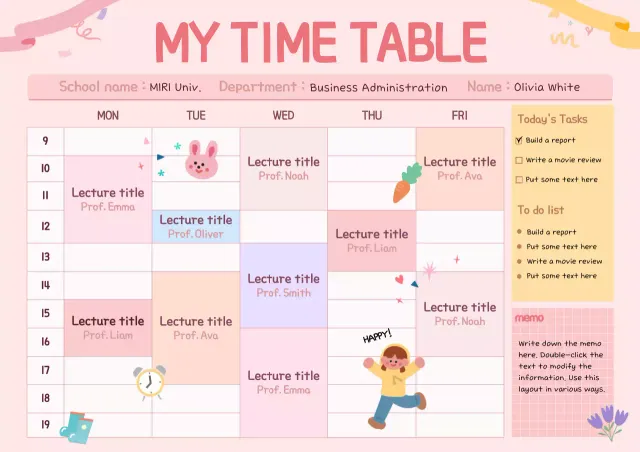
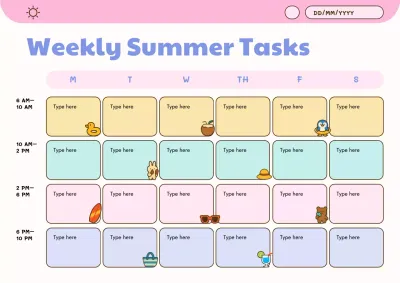
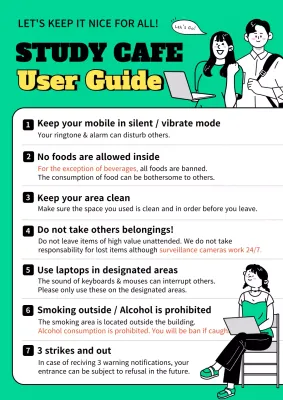
For those who are visually oriented, incorporating infographic-style timetables can be a game-changer. These timetables use icons, images, and color blocks to convey information quickly and effectively, catering to visual learners who process information better through images than text. This style not only makes the timetable more engaging but also aids in memory retention and comprehension. MiriCanvas offers a wide array of tools to create visually appealing timetables, ensuring that information is not only accessible but also memorable.
Corporate environments often demand a more understated and professional appearance, where minimalist designs are preferred. Such timetables are devoid of unnecessary embellishments, focusing instead on functionality and ease of understanding. MiriCanvas provides sleek, minimalist templates that are ideal for business settings, where the priority is on clear communication and efficient time management. These templates are particularly useful for meetings, project tracking, and resource management, where straightforward presentation is key.
For occasions that require a bit of creativity, such as planning seasonal events or special projects, themed templates offer an attractive solution. These templates can be customized to reflect the mood or theme of the event, incorporating colors and motifs that enhance the planning experience. Whether it's a holiday celebration or a product launch, MiriCanvas's themed templates ensure that your timetable is not only practical but also aesthetically pleasing, capturing the spirit of the event and engaging your audience effectively.
In summary, selecting the appropriate timetable style is crucial for effective planning and communication. Whether you prefer a structured grid, a detailed Gantt chart, a vibrant infographic, or a minimalist corporate design, MiriCanvas provides the tools and templates to meet your needs. By choosing the right style, you can create a timetable that not only organizes your tasks but also enhances the overall productivity and engagement of its users.
Essential Elements of an Effective Timetable
To create an effective timetable, it's crucial to incorporate several essential elements that promote clarity and efficiency. First and foremost, clear time intervals must be established. This means defining specific start and end times for each activity, which helps in setting boundaries and managing time effectively. These intervals should be consistent throughout the timetable to avoid confusion and ensure that users can easily understand their daily or weekly schedule. Additionally, distinct labels for each activity or task are vital. They provide quick insights into what each time slot is dedicated to, whether it's a meeting, class, or personal task. For visual differentiation, color-coding is an excellent tool. Assigning different colors to various categories of activities allows users to quickly identify and differentiate between work, leisure, and other commitments. This not only enhances the visual appeal of the timetable but also aids in quicker comprehension and recall.
Another key component is the use of headers for days or time periods, which organizes the timetable into manageable sections. This segmentation helps in visualizing the flow of activities over a week or month, providing a broader perspective on how time is allocated. Appropriate white space is also essential to prevent the timetable from becoming visually overwhelming. Ample spacing between elements enhances readability and allows users to focus on each item without feeling cluttered. For digital timetables, integrating interactive elements such as clickable sections or embedded links can significantly enhance functionality. These features allow users to access additional information or resources with ease, making the timetable not just a static document, but an interactive tool that facilitates better time management.
MiriCanvas templates incorporate all these essential elements while providing a high degree of customization. This flexibility ensures that users can tailor their timetables to fit specific needs, whether they are managing classroom schedules, work shifts, or planning events. The templates are designed to be user-friendly, supporting both basic and advanced customization options. This enables users to modify layouts, adjust color schemes, and integrate interactive features seamlessly. By leveraging these templates, individuals and organizations can create professional timetables that enhance productivity and streamline planning processes.
Best Practices and Common Mistakes to Avoid
When creating timetables, one of the most common mistakes is overcrowding them with too many tasks or activities. This can lead to visual clutter, making it difficult for users to discern their schedule at a glance and potentially causing important tasks to be overlooked. To counteract this, it is recommended to prioritize tasks and distribute them evenly across the timetable, ensuring there is a realistic amount of time allocated to each. This approach not only aids in maintaining a cleaner visual layout but also promotes a healthier work-life balance by preventing burnout due to over-scheduling.
Moreover, it is essential to avoid the pitfall of creating unrealistic schedules that do not allow for buffer times. Buffer periods are crucial in accommodating unexpected delays or additional tasks that may arise. They provide a necessary cushion that prevents the day from becoming derailed by unforeseen circumstances. Effective timetables incorporate these buffers strategically, ensuring that transitions between tasks are smooth and manageable. This practice contributes to a more relaxed and adaptable workflow, enabling users to handle changes in their schedule without stress.
Another aspect to be mindful of is the consistency in time formats. Mixing different time formats, such as using both 12-hour and 24-hour clocks within the same timetable, can cause confusion and lead to scheduling errors. It is advisable to choose one format and adhere to it throughout the entire document. This consistency aids users in quickly understanding their schedules and reduces the likelihood of misinterpreting the time allotted for tasks.
In terms of aesthetics, selecting fonts that are legible in both digital and printed formats is crucial. Fonts that appear clear on a screen might not be as readable when printed in smaller sizes. Therefore, opting for fonts that maintain clarity and professionalism in various formats is important. MiriCanvas templates address this concern by offering font options that are not only stylish but also highly readable, whether viewed on a device or in print.
Utilizing color psychology strategically rather than decoratively can significantly enhance the functionality of a timetable. Colors can be used to influence mood and productivity, with certain hues promoting focus and calmness. By carefully selecting colors that align with the purpose of each activity, users can subconsciously influence their own behavior and productivity levels. MiriCanvas templates incorporate these principles, offering a range of color palettes that serve both aesthetic and functional purposes, allowing users to create timetables that are not only visually appealing but also psychologically beneficial.
Overall, by adhering to these best practices and avoiding these common mistakes, users can create timetables that are not only effective but also enjoyable to use. MiriCanvas supports this process by providing templates that integrate these strategies, helping users to develop schedules that are both professional and personalized.
Current Trends in Timetable Design
As the landscape of timetable design continues to evolve, there is a marked shift towards integrating technology and aesthetics in a way that enhances both functionality and user experience. At the forefront of these trends are digital-first strategies, which prioritize the creation of timetables that are fully responsive and adaptable to various devices, from smartphones to desktop computers. This approach ensures that users can access their schedules conveniently regardless of where they are, fostering a seamless transition between different settings such as home, school, and workplace environments.
Interactive elements are becoming increasingly important in modern timetable design, as they offer a dynamic way to manage complex schedules. Features such as collapsible sections allow users to focus on specific portions of their timetable without the distraction of extraneous information, thereby improving clarity and usability. Conditional formatting is another innovative feature, enabling real-time updates and adjustments based on user input or changes in circumstances. These elements contribute to a more personalized and efficient scheduling experience, as they can adapt to the unique needs and preferences of individual users.
Educational institutions are also embracing these trends, recognizing the need for timetables that capture students' attention and facilitate engagement. By incorporating visually appealing icons and illustrations, schools and universities can transform traditional schedules into more engaging and interactive tools. These elements not only make timetables more attractive but also help convey information more quickly and effectively, particularly for visual learners. MiriCanvas stands out in this domain by continually updating its templates to reflect these trends, ensuring that users have access to cutting-edge design features that enhance both the aesthetic and functional aspects of their timetables.
Moreover, the importance of maintaining clarity and simplicity in timetable design cannot be overstated. As schedules become more complex, it is crucial to avoid overwhelming users with excessive detail. MiriCanvas addresses this challenge by offering templates that strike a balance between comprehensive information and clean design, enabling users to quickly grasp their schedules at a glance. By leveraging these thoughtful design strategies, MiriCanvas helps users create professional timetables that are as effective as they are visually pleasing.
Incorporating these current trends into timetable design not only improves user satisfaction but also increases the overall effectiveness of scheduling tools. By staying abreast of these developments, MiriCanvas ensures that its templates remain relevant and useful, providing users with the tools they need to manage their time efficiently and with style. As the demand for flexible and responsive scheduling solutions grows, embracing these trends will be key to meeting the diverse needs of modern users.
Engagement Tips for Better Timetable Adoption
To further enhance engagement with timetables, incorporating user-centric design elements is essential. This includes leveraging personalization options that allow users to tailor their schedules according to their individual preferences and needs. By providing the ability to customize colors, fonts, and layout, users can create a timetable that resonates with their personal style, making it more likely they'll interact with it regularly. Additionally, integrating reminders and notifications can significantly boost engagement by actively involving users in their scheduling process. These features act as gentle nudges, ensuring that users stay on track with their planned activities without feeling overwhelmed.
Furthermore, gamification techniques can be employed to make timetable adoption more appealing. By introducing elements such as point systems or achievements for completing tasks, users are incentivized to adhere to their schedules. This approach not only makes the process of following a timetable more enjoyable but also fosters a sense of accomplishment and motivation. MiriCanvas, with its versatile template options, supports these gamification features, allowing users to transform mundane scheduling tasks into engaging and rewarding experiences.
Another critical aspect of increasing timetable engagement is fostering a sense of community and collaboration. For team or group settings, features that allow for shared access and collaborative editing can enhance participation and accountability. When users feel part of a collective effort, they are more likely to engage actively with the timetable. MiriCanvas facilitates this by offering templates that support collaborative functionalities, making it easier for teams to coordinate and communicate effectively.
Lastly, it's important to ensure that timetables are adaptable to changes and unexpected circumstances. Flexibility is key in maintaining long-term engagement, as rigid schedules can lead to frustration and disengagement. By allowing for easy adjustments and modifications, users can seamlessly update their timetables to reflect real-time changes. MiriCanvas's intuitive interface and responsive design make it simple for users to adapt their schedules as needed, ensuring that they remain relevant and useful regardless of unforeseen developments.
In conclusion, by incorporating personalization, gamification, community-building, and flexibility into timetable design, users are more likely to adopt and engage with their schedules. MiriCanvas excels in providing templates that support these elements, creating an environment where timetables are not just tools for organization but also sources of inspiration and motivation. Through these strategies, timetables can become integral to effective time management, offering a satisfying and interactive experience for all users.
Diverse Applications of Timetables
Timetables have become indispensable tools across various sectors due to their versatile applications. In the realm of business, for instance, shift planning is crucial for ensuring that operations run smoothly and efficiently. By employing a detailed timetable, managers can allocate resources effectively, prevent overlap, and ensure that all shifts are adequately staffed. MiriCanvas offers customizable templates that cater to these specific needs, allowing businesses to adapt their schedules to accommodate any number of employees and shifts. Similarly, in the marketing domain, content calendars are vital for orchestrating campaigns and maintaining a consistent brand presence. With MiriCanvas, marketing teams can craft visually appealing and highly organized content schedules that align with their strategic goals, thereby maximizing productivity and coordination.
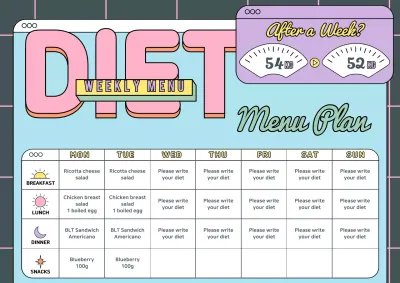
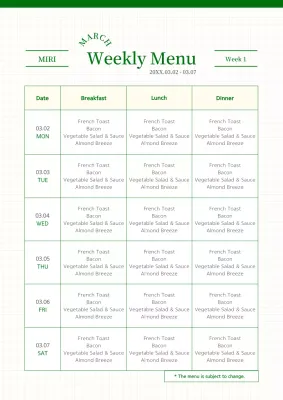
In the context of family life, meal planning timetables provide a structured approach to organizing daily nutrition. These timetables help families save time, minimize food waste, and ensure balanced diets. By using MiriCanvas, families can create meal plans that are not only practical but also visually engaging, with options to include recipes, shopping lists, and nutritional information. This approach transforms meal planning from a mundane chore into an interactive family activity.
For athletes and trainers, having a well-structured training schedule is essential for achieving peak performance. Timetables in this setting help in tracking progress, scheduling workouts, and managing recovery times. MiriCanvas provides templates that accommodate the unique demands of athletic training, allowing users to plan sessions that are tailored to their specific goals and regimens. These templates can incorporate elements such as intensity levels, rest days, and milestones, offering athletes a comprehensive view of their training journey.
Event planners, on the other hand, rely heavily on timetables to coordinate complex logistics. From scheduling speakers and arranging transportation to managing catering and entertainment, every detail is captured in a meticulously crafted timetable. MiriCanvas assists event planners by offering templates that can handle multifaceted events, ensuring that all logistical aspects are accounted for and synchronized.
In healthcare facilities, timetables are essential for managing patient appointments and staff rotations. These schedules ensure that healthcare providers can deliver timely and efficient care. MiriCanvas's specialized templates support the dynamic nature of healthcare environments, allowing for the integration of patient data and staff availability to optimize appointment scheduling and resource allocation.
Overall, the diverse applications of timetables underscore their importance in enhancing organization and efficiency across different sectors. MiriCanvas stands out by providing templates that are not only adaptable to various needs but also enhance user experience through intuitive design and functionality. Whether for personal use or professional application, these timetables serve as essential tools for effective time management and planning.
With MiriCanvas, individuals and organizations alike can harness the power of well-designed timetables to streamline their daily operations and achieve their goals with greater precision. The platform's diverse range of templates caters to a wide array of needs, showcasing the versatility and indispensability of structured scheduling in today's fast-paced world. As we continue to navigate increasingly complex schedules, the ability to customize and adapt these timetables to our unique requirements becomes crucial. MiriCanvas not only provides the tools necessary for this customization but also enhances the overall user experience by offering aesthetically pleasing and functional designs. In conclusion, whether you are coordinating a large-scale event, managing a team, or organizing your personal life, MiriCanvas empowers you to do so with efficiency and style, ensuring that every aspect of your timetable is aligned with your objectives.